

GPT-4 vs GPT-5: From a Developer’s Perspective

Full-Stack JavaScript Developer | React | Node.js | TypeScript | Crafting Scalable & User-Centric Web Solutions
GPT-5 is here — and as a developer, you might be wondering: "What’s really different, and does it matter for my work?"
Let’s break it down in plain English.
1. A Developer Example
Imagine you ask:
"Build me an e-commerce site."
What GPT-4 would do
It would create a functional site with product listings, a cart, and checkout.
But… it might skip deeper details like:
Secure payment integration
Rate limiting for API calls
How to handle heavy traffic during sales
What GPT-5 does instead
It goes beyond the basics and starts thinking like a senior engineer:
Chooses the right CDN for product images
Adds retry logic if a payment API fails
Decides between real-time or batch inventory updates
Plans database indexing for scaling to millions of users
Result: You don’t just get working code — you get a deploy-ready, well-structured, and edge-case-handled codebase.
2. A Non-Developer Example
Let’s say you ask:
"Make me a report."
GPT-4’s output
You’d get a report with data, charts, and summaries — but you might find:
Some data is wrong
Charts have mismatched scales
Conclusions lack context
GPT-5’s output
It works more carefully:
Verifies the data
Detects mismatches in charts
Writes conclusions with clear context
If data is uncertain, it warns you:
"I’m not confident about this section — needs verification."
3. The Reasoning Upgrade
This is where GPT-5 really shines.
With GPT-4, multi-step reasoning could go wrong if one step had an error — leading to hallucinations.
GPT-5 changes the process:
Works step-by-step
Cross-checks its own work
If unsure, it tells you instead of guessing
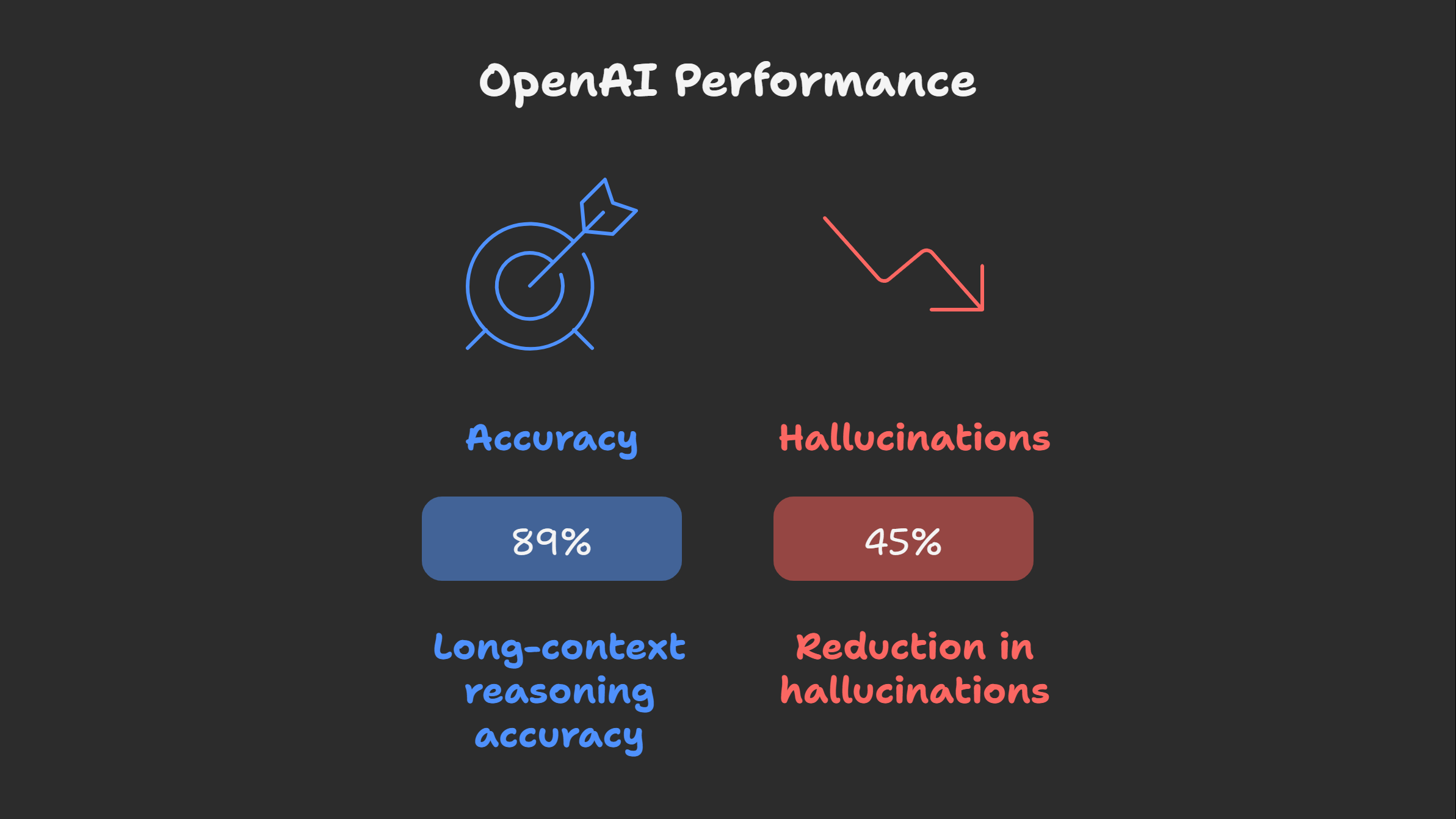
📊 OpenAI’s data:
Hallucinations: ↓ 45%
Long-context reasoning accuracy: 89%
4. Memory Boost
With GPT-4, long chats could lose context — it would “forget” things from earlier in the conversation.
GPT-5 now supports 256k tokens.
That means it can remember:
A 4–5 chapter book
Weeks of chat history
A large codebase — without losing track of variables, dependencies, or previous instructions
5. In Short
GPT-4 → An assistant you had to guide constantly.
GPT-5 → A partner that understands the deeper problem, builds solutions accordingly, and adapts — knowing when to go deep and when to keep it short.
Final Thoughts
If GPT-4 was like a junior dev who needed hand-holding, GPT-5 feels more like a tech lead — one who thinks about scalability, security, and long-term impact before writing a single line of code.
For developers, this means less micromanaging, fewer corrections, and more ready-to-deploy results.


